To check an outboard for recalls, you need the engine's serial number, not the boat's HIN. Engine recalls follow serial number ranges, and the engine may not be the one the boat left the factory with. Find the serial tag on the engine bracket, enter it in the maker's own recall lookup, and then check the US Coast Guard recall database for older campaigns. A dealer confirms the result and does the work.
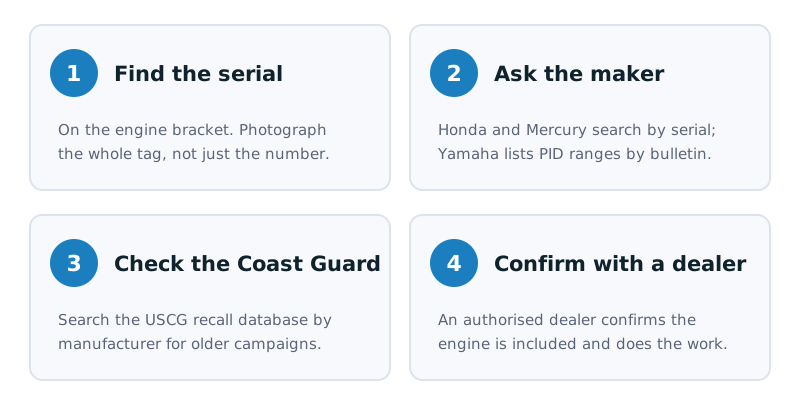
Step 1: find the serial number
Every outboard has an identification tag or plate on the bracket that clamps it to the transom. Where exactly depends on the brand:
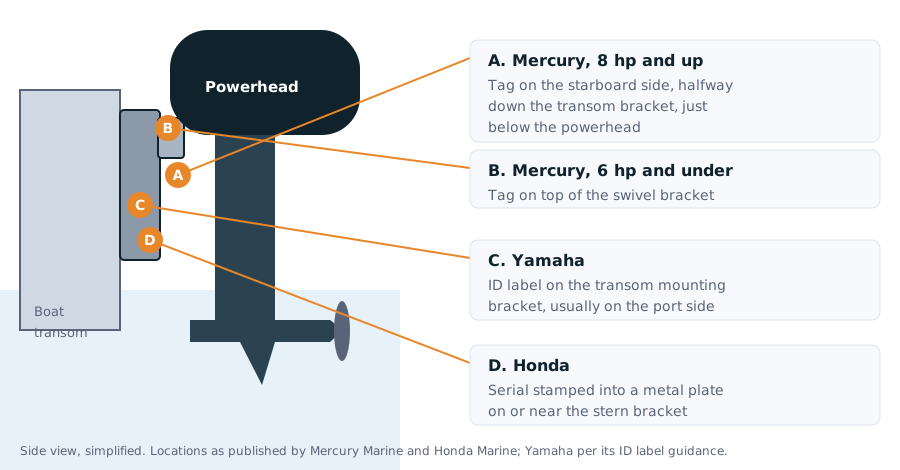
Take a photo of the whole tag, not just the number. The model code and any prefix matter as much as the digits, and tags fade. If the tag is missing or unreadable, a dealer can usually identify the engine from its other markings.
Step 2: check the maker's recall lookup
Each engine maker publishes its own recalls, and the format differs.
Honda: search by serial number
Honda Marine's recall page takes the frame serial number directly. Honda serials are a four-character prefix and a seven-digit number:
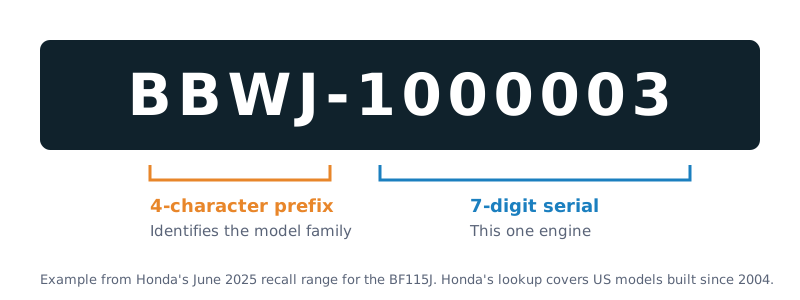
The lookup covers US models built since 2004. For anything older, Honda asks owners to contact a dealer.
Yamaha: compare your PID to the bulletin ranges
Yamaha's service campaigns page lists each bulletin with the models and serial (PID) ranges it covers. Find your model, then check whether your number falls inside a range with the same prefix:
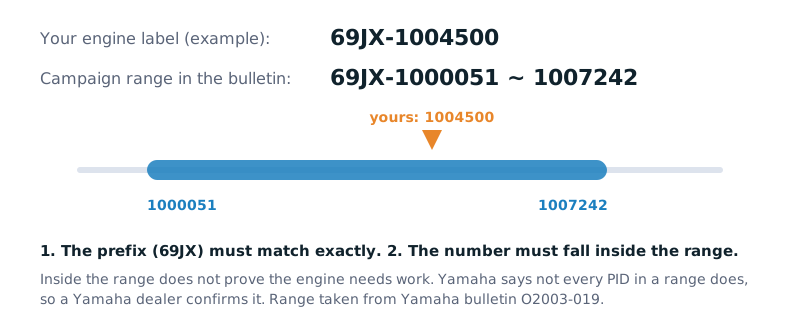
Mercury: check the recall notices for your model
Mercury publishes its safety recalls by model and horsepower on its regional websites, and a Mercury dealer can check a serial number for you. Recent campaigns have covered specific V6 and V8 cowl assemblies, joystick piloting and some FourStroke shift link parts, so the model name on your tag is what you're matching.
Step 3: check the Coast Guard recall database
The US Coast Guard recall database holds campaigns for boats and boating equipment, including engines. Search by the company name. Here is what a search for Mercury Marine returns:
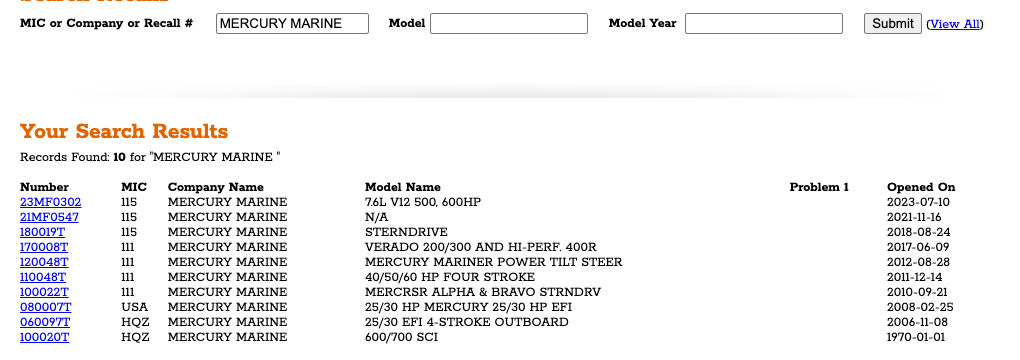
Two things to know. The Coast Guard records list the model name and the date the campaign opened, but the problem description is often left blank, so click through to the record and then read the maker's notice. And some engines appear under an older company name; try the brand name on its own as well as the full company name.
Step 4: confirm with a dealer
A match in any of these lists means a campaign exists for engines like yours. It doesn't prove your engine still needs the work, because it may already have been done. An authorised dealer can check the serial against the maker's system and tell you whether the campaign is still open on that engine. Ask the seller for service records too, if you're buying.
The hull can have recalls too
Engine checks don't cover the boat itself. Builders file their own Coast Guard campaigns for defects in the boat itself. Run the boat's HIN through the boat recall check to see the campaigns on record for its builder, and see boat VIN lookup for the other free checks worth doing on a used boat.
Check the boat, not just the listing
Type the 12-character hull number from the transom. The decoder reads the builder, build month and model year, and the recall lookup lists any US Coast Guard recall campaign on record for that manufacturer. Free, no account.